ARIS RESEARCH PROJECT · J4-60080
WHEATSHIELD
Harnessing the power of rhizobacteria to enhance wheat resilience to drought stress.

Funded by the Slovenian Research and Innovation Agency (ARIS).
Project reference: J4-60080
- Project period
- 1 January 2025–31 December 2027
- Principal investigator
- Dr. Nejc Stopnišek
- Research focus
- Wheat · rhizobacteria · drought resilience
PROJECT OVERVIEW
Microbial partners
for resilient wheat.
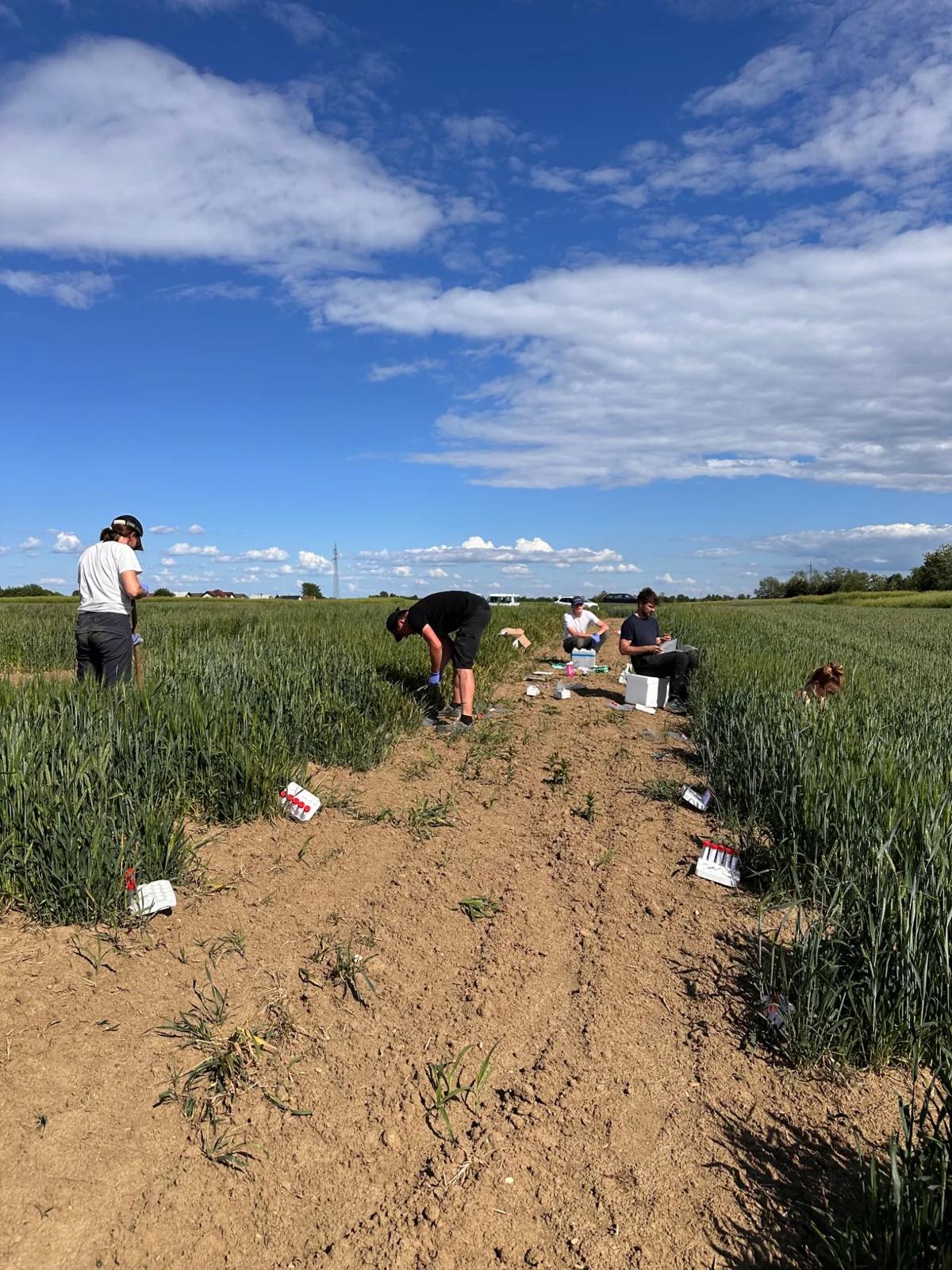
WHEATSHIELD investigates whether beneficial bacteria associated with wheat roots can help plants cope with drought. We connect variation among wheat genotypes with their rhizosphere microbiomes, identify candidate rhizobacteria and test their effects in controlled experiments.
The aim is to move from associations between microbes and drought responses to experimental evidence about the organisms and mechanisms involved. This provides a foundation for microbiome-assisted approaches to crop resilience.
OBJECTIVES & WORK PACKAGES
From community patterns
to candidate mechanisms.
Identify
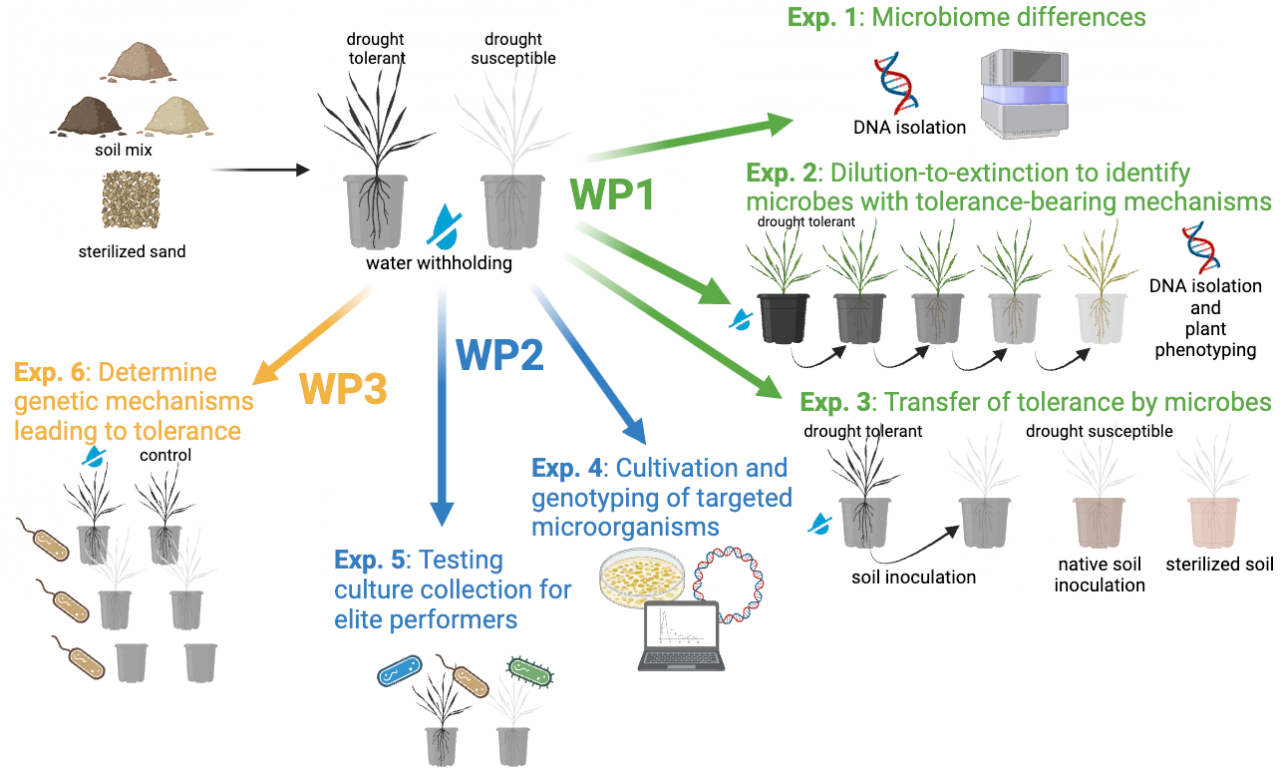
Characterise microbiomes associated with contrasting wheat drought responses and identify potential microbial contributors.
Isolate
Cultivate, genotype and characterise candidate rhizobacteria, building a collection for experimental testing.
Test
Investigate how selected strains influence wheat responses to water stress and explore the mechanisms behind these effects.
ACTIVITIES & EXPECTED OUTPUTS
Field questions.
Experimental follow-through.
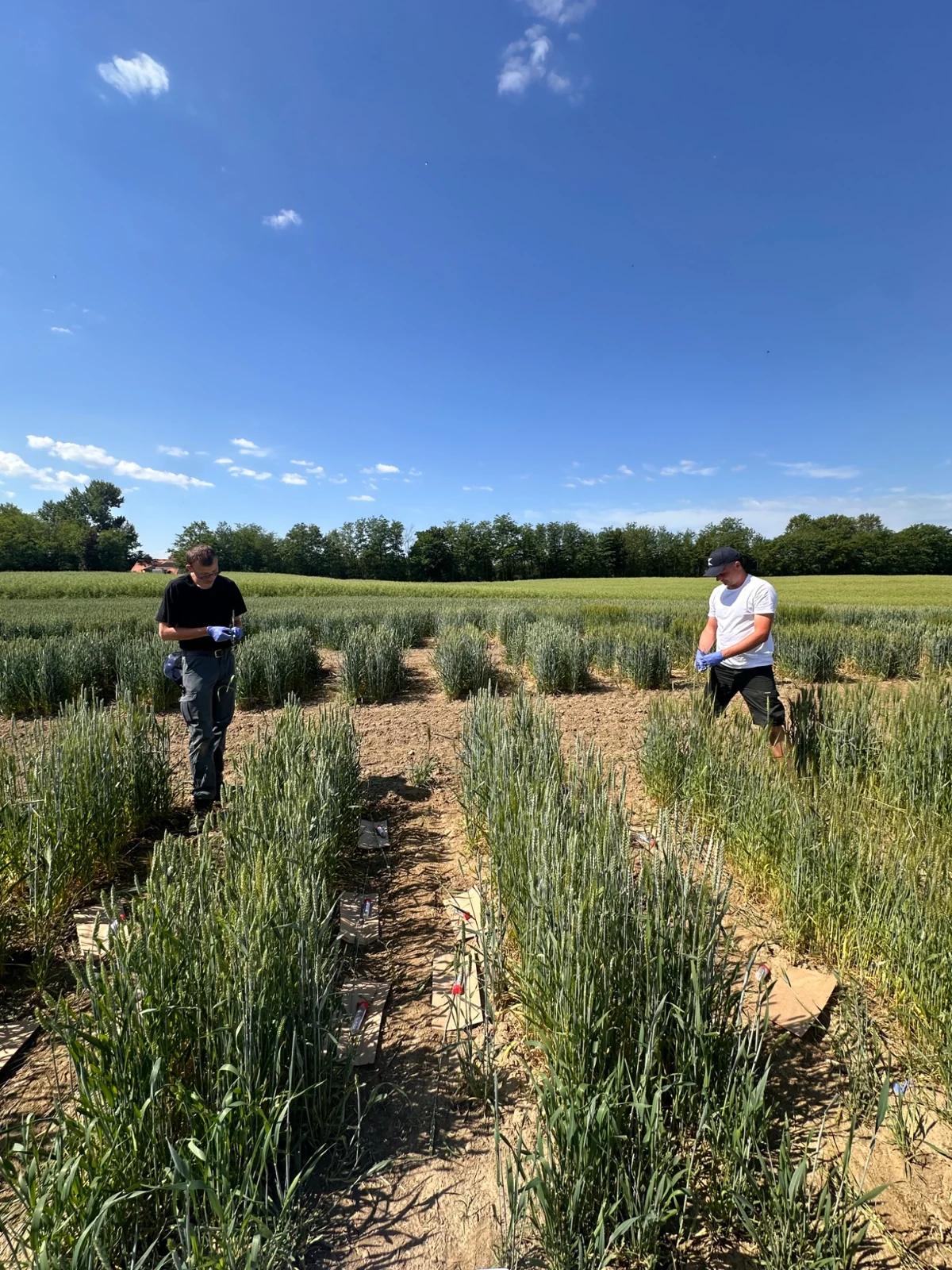
The project combines field and pot experiments, microbiome sequencing, plant phenotyping, microbial cultivation and inoculation assays. The field programme compares wheat accessions under contrasting water regimes.
Expected outputs
- Microbiome profiles linked with wheat genotype and drought responses.
- A collection of characterised candidate rhizobacteria.
- Experimental evidence on candidate strains and plant responses to water stress.
- Research publications and resources to support further microbiome-based crop research.
These are intended project outputs. Project-specific publications and public resources will be linked here as they become available.
Explore related master’s research topicsRESEARCH TEAM
Expertise across
plants and microbes.
The research connects expertise at the Agricultural Institute of Slovenia (KIS), the Faculty of Agriculture and Life Sciences of the University of Maribor (FKBV) and the National Laboratory of Health, Environment and Food (NLZOH).
Collaborators include Primož Titan, Manfred Jakop, Silva Grobelnik Mlakar and Maja Rupnik.
Meet the ME2andA teamFUNDING ACKNOWLEDGEMENT
Supported by ARIS.
This research is funded by the Slovenian Research and Innovation Agency (ARIS), project J4-60080: Harnessing the power of rhizobacteria to enhance wheat resilience to drought stress.
Raziskovalni projekt J4-60080 financira Javna agencija za znanstvenoraziskovalno in inovacijsko dejavnost Republike Slovenije (ARIS).
PROJECT CONTACT
Connect with
WHEATSHIELD.
For research collaboration, project information or student research enquiries, contact Dr. Nejc Stopnišek.
nejc.stopnisek@kis.si